
Several American authors are suing Meta for copyright infringement, alleging that Meta used pirated books (found on LibGen) to create its products; so what is it about creative writing and the work offered by creative writers that AI just can’t replicate?
Authors suspect that some software developers are misappropriating their work to improve their systems. What’s the reason? What do human authors do that robots can’t do?
By-the-way, Meta denies this copyright infringement, claiming its use of the content found on LibGen falls under fair use.
Striking a balance between a creators’ rights and the public’s right to build upon artistic work has always been the aim of copyright law; however, unauthorised copying or modification is universally seen as copyright infringement.
By default, the Berne Convention gives copyright holders authority over their works. Therefore, to be free to use, copyrighted material must be explicitly released by its creator, and this is usually done via a free license (or open license / free distribution license) that defines the allowed uses. From what I understand, the authors suing Meta haven’t stated their content was free or was licensed for free distribution.
What distinguishes human creative writers from AI?
So what do creative writers do that A.I. software giants cannot do? Why are major AI companies trying to exploit their creative resources?
The AI developers are not just using author’s words, that’s the least of it! They’re using the author’s ideas… creative writers come up with ideas. And the software giants are plundering those fresh ideas!
What unique abilities do human creatives possess that AI robots cannot replicate?
- Creative individuals experience the world through daily tasks like coffee drinking, cooking, and doing household chores. Routine things help contribute to their understanding of society, their relationships, and their place in the universe. Robots don’t ‘live and work’ in a real world.
- Creative people get along with other humans, or sometimes disagree, but can explain why and how these disagreements arise, and real humans can articulate their thinking. Robots don’t have human friends or human enemies.
- Creative people acquire knowledge through interacting with other humans, and by feeling emotional impacts, either through direct experience or through human observation. Robots don’t feel emotions.
- Creative people do fieldwork by going to real places, meeting real people, and observing real behaviours and revealing real personalities. Robots don’t explore ‘real’ places or meet real people… they live in a virtual universe.
- Creative people connect with other humans, constantly expanding their understanding of humanity. Robots only connect with other robots.
- Just like everyone, creative people dream. Sometimes their dreams lead to fresh ideas. Do robots dream?
Humans perceive and interact with the world (through art) in ways that are impossible for machines
- Creative individuals are able to portray emotions due to their capacity to feel emotion. Robots have no emotions to feel, so cannot portray feelings.
- Creative people engage all their senses — listening to music, viewing art, feeling the sun, tasting the coffee, and smelling the freshly cut grass. Humans perceive and interact with the world (through art) in ways that are impossible for machines.
- Human behaviours help creative people refine their thoughts and thinking patterns within larger contexts, helping them consider the broader implications of situations and events. Robots are not able to envisage broader implications.
- Creative people generate original words, create unique narrative styles, conceive new characters, theorise uncharted territories, and even conjure unrealized inventions; Creative people explore a wide array of ideas and concepts. They create new things. Robots don’t create anything new: they just copy what has already been visualised in the mind of one or more creatives.
- Creative people’s self-expression is not only functional and efficient but also decorative, entertaining, abstract, and very probably metaphysical. Robots can’t be entertaining because entertainment is controlled by human emotion and depends on human context.
Any thoughts? Let me know!
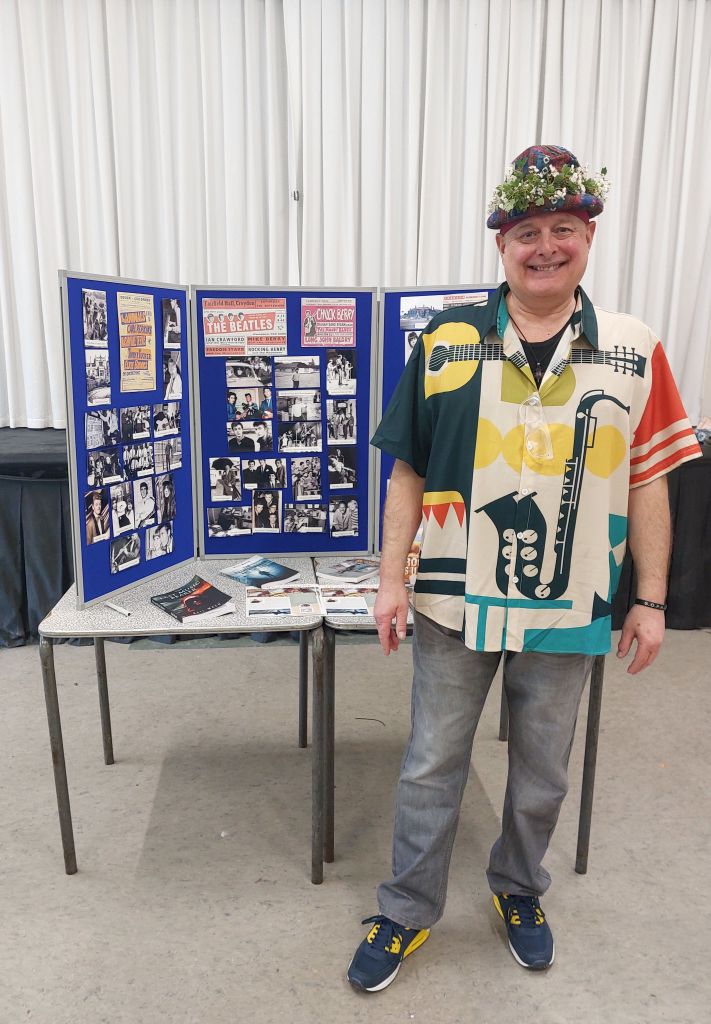
With over 20 books written, Neil is not only a published author but also a multi-time NaNoWriMo champion. Neil describes himself as a ‘hippy grandad!’’
Neil’s home is located in Surrey, England, by the River Thames. He is proud to identify as a real human… not a robot!
 Max Writivity Club