The Last Music Bearer

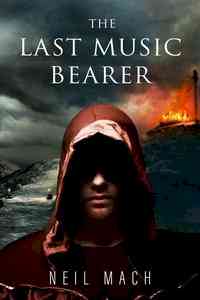
If the authorities banned music, what kind of world would we live in? Delving into medieval Europe, rock journalist Neil Mach skilfully depicts the torment & sorrow that results from censorship & exile in his ingenious story, The Last Music Bearer.

But his tale is not complete fantasy: From 1996-2001, the Taliban government in Afghanistan banned all Western music. Musical instruments were destroyed, festivities were prohibited, musicians were banished, and only religious chants praising the leadership were allowed. The ban was put back into effect following the return of Taliban rule in 2021.

In North Korea, music is restricted to state-approved performances and state-authorised ensembles. The only music that’s allowed must promote the Kim dynasty and Juche ideology. Most Western music is banned.

Neil Mach’s story takes place in a medieval world where, like in Afghanistan and modern-day North Korea, the state-religion oppresses music and song.

The Church decreed that all music was wrongful. Bells, whistles, drums, and gongs — all these were illegal…

The Last Music Bearer by Neil Mach

The sound of music reaches those in need thanks to a group of wandering friars. But, as in Afghanistan, the authorities in his novel operate a gang of totalitarianists, the Black Hounds, who belong to a formidable brotherhood. Their state-sponsored mission is to destroy music. The Black Hounds systematically observe the operations of the Music Bearers and aim to hunt them to extinction.

The secret pro-music society takes in Elis, an orphan, and moulds him into one of their song carriers. While being targeted by the Black Hounds, Elis must accomplish his mission.

Music Bearers were compelled to keep moving, or they would be identified & slaughtered…

The Last Music Bearer by Neil Mach

Despite never mentioning a childhood romance, Elis carries deep sorrow over the way his relationship with a girl concluded and as he anticipates life as a celibate Music Bearer. The longing he experiences will hinder his musical journey.

Pussy Riot were banned  by Putin's government. Photo credit Vinylone

In the meantime, a determined new member of the Black Hound secret-police aims to establish a reputation by capturing a key undercover agent of the Music Bearers. Is he capable of picking up this mysterious underground operator? Or will Zadock, the merciless seeker of musicians, reach her before his talented rival does?

There is freedom in music…
and music in freedom…

The Last Music Bearer by Neil Mach

Will the Black Hounds completely eradicate music? Will the dark forces of prohibition overpower the light of harmony?

Can a single person save and protect euphony? Does a displaced orphan even care about the survival of music? Or is he out to save himself?
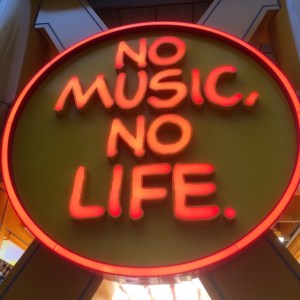
no music no life , photo credit: keatl

Wouldn’t Elis, the Last Music Bearer, simply prefer to leave behind the daunting duty of sharing music… and escape this unappreciative world?

The Last Music Bearer by Neil Mach
Available as paperback : ‎ 256 pages
Language ‏ : ‎ English
ISBN-10 ‏ : ‎ 1508685460

main photo credit: Judy van der Velden [CC]

Slutting the Globe

In this contemporary love comedy, London-based Kim-Kim is a single girl who recently parted ways with an egotistical partner.

She is now in search of a man who will lift her from boredom and fulfil her carnal desires.

She sets-out on a mission for her own needs, eagerly pursuing relationships with sex partners worldwide.

The words sunk into her skin like cut-price itch-cream hitting a rash…

Slutting The Globe by Neil Mach


Embark on an extraordinary adventure with Kim-Kim as she travels the world in pursuit of closeness. On this journey, she will discover her sexual identity and true values.

This sexscapade is delightfully readable and serves as a comprehensive critique on female emancipation.

slut walking - photo credit: Studio5Graphics [CC]
…her life flew about like a five-pence coin sucked-into the canister of a worn-out vacuum cleaner…


Read how Kim-Kim regains her sensuality and expands sovereignty over her sexual requirements.

We have to fry a few flounders before we find a fish that suits our twiffler…

Slutting the Globe by Neil Mach

Kim-Kim targets males in a hunt against time. Once she tracks them down, Kim-Kim will seize them with both fists. She will emancipate herself from the dominance of men and male guardianship.

Kim-Kim is about to uncover her sensual worth!

slut don't touch this... photo credit Susan Melkisethian [CC]

This tale also highlights the sheer ineptitude of men – instead of being confident and in control, most of the guys Kim-Kim encounters are scaredy-cats!

If you’re looking for a sex manual, this could be the ideal starting point as it delves into the reasons behind the sensual experience, rather than focus on the mechanics. It’s more than just a voyeuristic examination of breasts, pipes, and open gaps!

Life is a scrunch of toilet paper: no matter how much you twist it, the poop never gets properly wrapped…

Slutting The Globe by Neil Mach

If you’re intrigued by the concept of a woman igniting her own erotic connections, then you’ll find pleasure in witnessing this queen-like figure emerge, open up, and triumph over the realm of men!

Slut is a social construct. photo credit txmx 2 [CC]

If you’re intrigued by a woman igniting her own sexual desires, then you’ll find pleasure in witnessing this powerful woman embrace her sexuality and dominate the world!

Though, at what cost?

Main photo credit: Studio5Graphics

Slutting The Globe
Available in paperback‏: ‎ 240 pages
Language ‏ : ‎ English
ISBN-10 ‏ : ‎ 1533176957

Does your mind get lazy?

Creative laziness occurs when someone doesn’t put in the effort to ‘think hard’, despite being fully capable of doing so.

Creative individuals perceive laziness as a disruption to their mental & spiritual well-being, while most ‘non-creative’ people associate laziness with physical signs such as lounging, slumping, or idling (a lack of enthusiasm, apathetic behaviour, aimlessness).

Does your mind get lazy?

Creative individuals frequently become engrossed in their own thoughts and will be self-focused and driven, though this intense focus often drains them so they become devoid of inspiration.

Like everyone, creatives have a natural desire for connection and belonging, and so ‘reaching out’ behaviour can lead to procrastination, seeking shortcuts, copying others, and getting distracted from the creative discipline.

Outside influences such as overwhelming stimulation (perhaps caused by video games) or from diversions generated by over-use of social media can also lead to creative laziness.

BUT… laziness isn’t :

  • Laziness is not being tired or lacking energy
  • Laziness is not being unable to focus because of ongoing health concerns
  • Laziness is not about feeling out of one’s depth and needing help to continue
  • Laziness is not about streamlining or fast-tracking work to be more efficient
  • Laziness is not about becoming distracted by family or financial worries
Photo creadit: David Clode
Photo credit: David Clode

So, what defines a lazy creative?

A creative person who is becoming lazy:

  • takes short-cuts by over-relying on artificial intelligence tools or word generators
  • steals ideas from other creatives
  • copies verbatim from other artists
  • fails to strive for originality
  • bypasses the need for fact-checking or diligent research
  • sidesteps the need for quality control

Creative laziness occurs when someone doesn’t put in the effort to ‘think hard’, despite being fully capable of doing so…

Author Neil Mach

How to avoid creative slapdashness

  • Set yourself measurable creative goals
  • Divide your creative projects into manageable chunks
  • Make your daily routines less complicated and more ‘fun’
  • Look for ways to support other creatives
  • Change your perspectives (even if it’s just temporarily) — go for a walk, take a trip
  • Find a role in your community to help others
  • Ask other creative people for help and/or advice
  • Arrange or rearrange work spaces & immediate surroundings to keep things ‘fresh’
  • Watch, read, or listen to motivational / inspirational works
  • Abstain from social media for a while
  • Give up video gaming for a while

Words: © Neil Mach
Main photo: © Adrian Swancar

Any comments or suggestions?

Neil Mach is the author of MAX AUTHOR POSITIONING – A Self-Promotion Strategy for Indie Writers

The Qualities of a True Writer

People are trying to make money by uploading AI-generated manuscripts onto Amazon.

The fact that these fake entrepreneurs are eroding the earnings of respectable writers is disheartening. Since book sales don’t bring in much money anyway (so these fraudsters wont make as much cash as they’d suppose) legitimate writers have to put in even more effort to be recognised & appreciated— as if selling books was not hard enough already!

The artificial intelligence book traders are looking to make rapid profits and believe they are riding a trend. But can they make cash out of their misrepresentations?

Being committed in writing means being dedicated to a cause…

Author Neil Mach

The behaviour of the A.I. charlatans has inspired me to think about the actual qualities required to be a true author. Obviously, honesty is a primary requirement. This includes being honest with oneself about one’s limitations, as well as being honest with the book-buying public, and with friends, family, and neighbours, and of course with the sales platform that’s used.

But what other capabilities are necessary to become a legitimate author? I think the four most important qualities are: aptitude, commitment, creative imagination, and sticking power. I will go through each in a little more detail.

Working Author - photo credit: William Fortunato
Credit: William Fortunato

1:Aptitude

Aptitude is a necessary element for the basic performance of any written task.

Aptitude is frequently mistaken for a set of skills, such as the skill of uploading an artificially-generated manuscript onto a platform (versus the talent needed to write an original and imaginative piece). But aptitude is more than just a skillset: aptitude relates to human mental ability (not machine learning or robotic shortcutting.) Aptitude relates to human capacity.

Testing your reasoning skills can provide a useful insight into your writing approach and capabilities.

For example:

  • Do you consider writing to be a social activity? If so, how will your writing help people and society?
  • Are you willing to share new ideas? If so, what concepts are you most keen to present to the public?
  • What specific contributions do you make with your writing?
  • How would you rank your literacy in terms of reading, punctuation, grammar, and comprehension? Is it poor, medium, or good?
writing requires commitment & effort - photo credit Andrea Piacquadio

2: Commitment

Being committed in writing means being dedicated to a cause. Creative people are motivated by truth, and to originality, and the genuine expression of thoughts through feelings. If they are creative writers, their expression is delivered through words.

Authentic writers prize truth and genuine expression over cash reward. Commitment is something that can’t be bought, it doesn’t come hurriedly, and it doesn’t come without exertion. Writing demands courage, ethical strength, and a readiness to learn from mistakes and work harder. If there is no effort involved, there is no commitment.

Writing demands courage, ethical strength, and a readiness to learn from mistakes and work harder…

Author Neil Mach

3: Creative Imagination

Creative imagination involves generating unique mental images, concepts, and ideas. To be an effective writer, ideas must be original. The ideas & recommendations generated by a device are never original. A.I. generates trite, identical outcomes based on the re-processed thoughts & notions of other writers and thinkers. So, using A.I. is a copy-cat cookie-cut production method: nothing more!

Coming-up with innovative ideas, thoughts, and images is an intensive process and the effort & strain of creative imagination should not be underestimated. Getting a machine to do these tasks is an easy-peasy option for those who dislike the effort involved in creativity. Because machine-generated ideas can never produce the same high-quality products that actual artists can, those who are tempted to employ artificial intelligence (A.I.) to write a book lack true originality & distinction.

Coming-up with innovative ideas, thoughts, and images is an intensive process and the effort & strain of creative imagination should not be underestimated

Author Neil Mach

4: Sticking Power

Sticking power refers to the capacity to persist with a task until it is properly completed. It’s the capability to accomplish demanding and arduous activities until they are ready to show to an audience. Sticking power is about having the strength to push through to the end of a project: no shortcuts, no quick-fixes.

When an individual lacks the aptitude, commitment, creative imagination, and the sticking power required to write effectively they might be tempted to use text-generating software or artificial intelligence systems. They might assume there’s a faster & easier way to create written products— yet by using machine processes, they deceive not just their audience but also themselves!

Words: © Neil Mach
Main image: Ketut Subiyanto

Why write a novel?

Writing a novel is an endeavour that aims to translate a sincere reaction to the human situation into language that will both amuse & educate readers.

Since it derives from the Italian word novella, the heartfelt response must be new or at least presented in a creatively original way.

By writing a novel, a writer can convey their innermost thoughts & perceptions and these will generally be on the things they have encountered, experienced, discovered, learned, or witnessed.

The human mind is naturally inclined to study, investigate, contrast, and compare so a writer will enjoy expressing, putting into words, the thoughts & perceptions learned through investigation and experience. By putting thoughts into text, the writer provides a place where a reader might draw conclusions by comparing what is written with their own life experiences.

By writing a novel, a writer can convey their innermost thoughts & perceptions…

Neil Mach

Novelists frequently explore themes like disappointment, regret, success, loss, and wickedness. These ‘dramatic’ themes provide readers with a safe place to explore feelings, experiences, and circumstances that are new to them, while also giving the writer a safe place to experiment with uncomfortable or unfamiliar events & situations.

Examples of common topics include:

  • seeking identity in an unaccommodating world
  • striving for greatness or goodness in a tainted world.
  • dealing with retaliation or revenge
  • the search for and discovery (or loss) of love

Have you written a novel? Did your novel include one (or more) of the above?

Picture credit Leslie Lopez Holder (CC)

*

When an infant washes up on the south coast of England, what does an elderly man do with the foundling? When a young, unmarried woman barges into his life, how does he handle her blarney? The young woman and the baby’s intrusion throws his strict everyday routine symmetry into disarray. The elderly man starts to feel disoriented in a world he no longer understands and that seems to be made up of irate individuals who are unable to disguise their prejudices. Meanwhile, he has a baby to care for… why won’t society help him find this child’s parents?

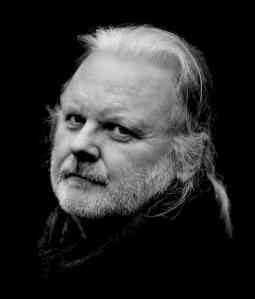
Norwegian dramatist JON FOSSE wins Nobel Prize in Literature

JON FOSSE a Norwegian playwright, author, and poet, has received the 2023 Nobel Prize in Literature during a ceremony held in Stockholm.

Since releasing his first fiction work, Raudt, Svart [Red, Black], in 1983, Fosse has authored more than forty theatre plays that have been translated into more than fifty languages, as well as prose, poetry, essays, short tales, and children’s books.

Fosse is the first Norwegian to win the Nobel Prize in Literature following novelist Sigrid Undset ninety-five years ago. Typically, Prize Laureates are awarded for the author’s life work.

Jon Fosse credit Tom A. Kolstad Det norske samlaget (CC)

After Henrik Ibsen (who did not win the award) the founder of realism, Fosse is reportedly the most performed dramatist in Norway.

His recent A New Name: Septology VI-VII, which American writer Damion Searls translated into English, was included on the 2022 Booker Prize shortlist.

Fosse, 64, is not a challenging writer, according to Anders Olsson, the head of the Nobel Committee for Literature. He writes about universal feelings like death, separation, and the fragile nature of love and he used the most basic of language.

Main image credit: Gu Bra (CC); Author photo, credit: Tom A. Kolstad Det norske samlaget (CC)

*

When an infant washes up on the south coast of England, what does an elderly man do with the foundling? When a young, unmarried woman barges into his life, how does he handle her blarney? The young woman and the baby’s intrusion throws his strict everyday routine symmetry into disarray. The elderly man starts to feel disoriented in a world he no longer understands and that seems to be made up of irate individuals who are unable to disguise their prejudices. Meanwhile, he has a baby to care for… why won’t society help him find this child’s parents?

Book Digitisation Boosts Sales

Cornell University has reported that book digitisation could boost demand for hard copies.

When the Google Books project digitised and made over 25 million texts available for free over two decades ago the decision provoked dissenting gasps and grumbles from authors and many established publishers.

However, recent research from Cornell’s Imke Reimers suggests that digitisation may be the driving force behind a rise in demand for physical books.

The key findings from Cornell showed that digitisation can increase demand through online discovery, leading to an 8% increase in physical book sales. It was discovered that less well-known books saw larger sales increases, which even extended to non-digitised publications by digitised authors.

Cornell University students: picture credit Keira Burton (CC)

A total of 37,743 books (scanned between 2005 and 2009) were examined by Cornell researchers. They evaluated sales data from the two years prior to and two years following the digitization period and discovered significant variations in the probability of higher sales for the digitised and nondigitized groups. Sales of almost 40% of digitised titles increased!

Link: cornell.edu

Main Image credit: Dom J (CC); Cornell University Students Image credit: Keira Burton

Neil Mach: https://books2read.com/u/mVekR2

How to Reach Creative Peaks

For the past ten years, I have successfully finished NaNoWriMo, writing over 50k words in 30 days each time. Here’s my list of eight helpful suggestions for unleashing your creative side…

  • Live genuinely: this entails putting your faith in your inner self and your own abilities above the use of artificial intelligence instruments.
  • Make use of new viewpoints to enhance creative thinking. View the situation from the perspective of a different character or in reverse. Determine alternate viewpoints, or contrasting ways of thinking, to test and challenge your inbuilt biases
  • Take note of any gut signals (intuition) or subconscious cues, and bring those half-hidden ideas to the surface in your writing. Give yourself room and (silent) time to set the stage for listening to those inner feelings. And note them when they arrive!
  • Distinguish what is deemed an acceptable achievement by the ‘outside’ world to what is creatively possible in the limited time that you have. Success might not need you to write an entire book or commit to a whole bunch of words, just to hit some arbitrary wordcount; Instead, achievement might involve the actions you took just after pausing for a while to take notice of your feelings. Those actions don’t have to involve writing! Those actions might just be you coming to terms with abstract notions & thoughts. It’s important to understand that abstract thoughts are the nourishment of creation.
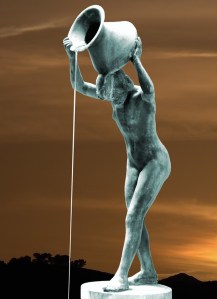
photo of Statue in Rome Italy photo credit: gnuckx (Public Domain)
  • To help calm your creative spirit before you stiffen your resolve to start writing, use mood boards, music, and art
  • Steer clear of non-creative distractions, such as gaming and social networking. However, watching documentaries, listening to music, going to museums & galleries, and reading (good) books will help you become inspired
  • Permit yourself to have fun. Scribble, doodle, or illustrate. Make use of textures and colours. Create a fresh look for yourself. Assemble Lego. Make a clay model. Engage in hands-on work to construct something that’s fun: this will stimulate your cognitive functions.
  • Since creativity requires a lot of energy, you must nourish yourself by eating a well-balanced diet, exercising, and—above all—permitting yourself plenty of rest


    Good luck with NaNoWriMo 😊
  • Images credit: gnuckx (Public Domain)

    My first #NaNoWriMo winner can be downloaded at these places: https://books2read.com/u/3Lx1YJ

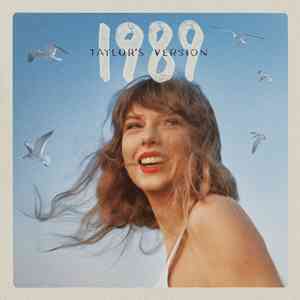
    Taylor Swift responds to slut-shamers with new song

    With the release of five previously unheard tracks from her rerecorded version of 1989, the best-selling album of her career, Taylor Swift has thrilled fans.

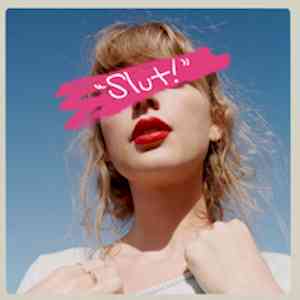
    One track, titled “Slut!” challenges her notoriety at the time of the first recording and responds to those who were critical of her.

    The song, written by Swift with Jack Antonoff & Patrik Berger, is a conceptual reaction to how Swift’s dating life had been portrayed by the media.

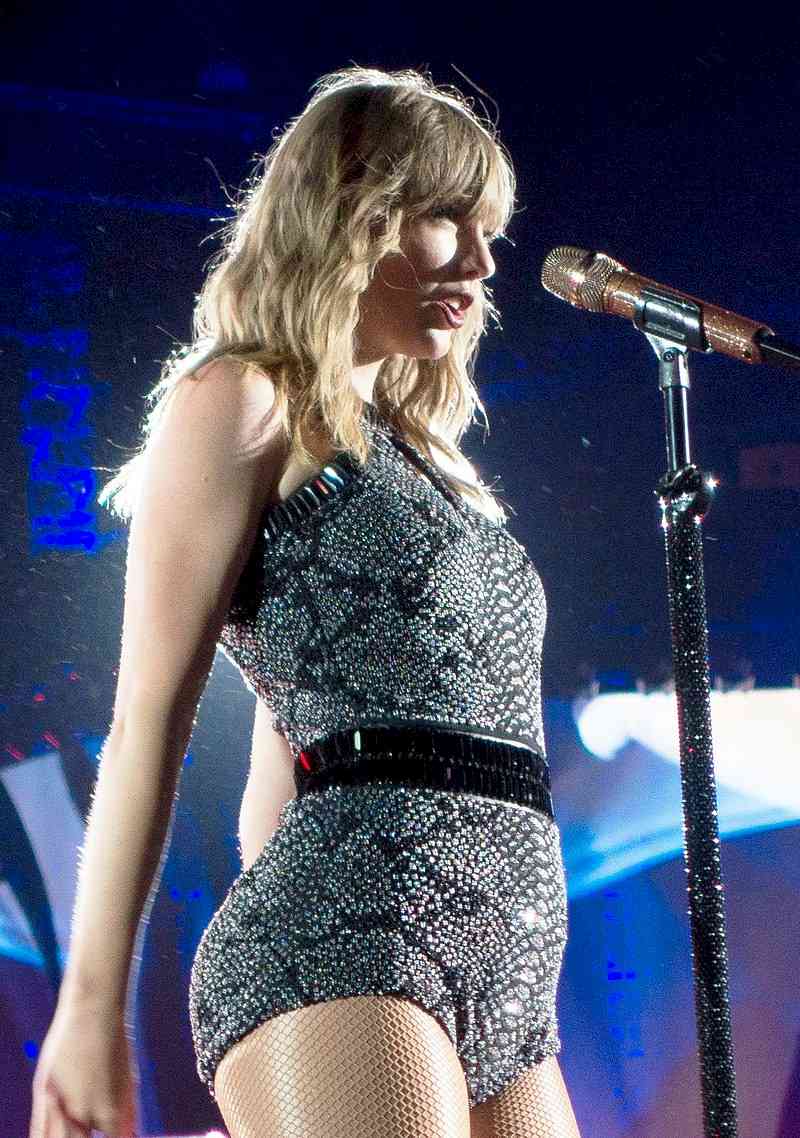
    Slut! Taylor Swift

    The multiple award-winning musician believes that she has been the target of slut shaming. Many folks claim that slut-shaming is done to establish male authority & control over women. Certain men (and women too) believe that sexually confident women are attention-seekers and “sluts.”

    A woman is viewed as a slut in our society if she seems to be having fun with her sexuality. The patriarchy has imposed a stereotype on women that demands they must adhere to expectations of obedience and should behave modestly. Guys are also impacted by body shaming, but discrimination based on sexual desire exclusively impacts women!

    1989 (Taylor’s Version), was released on October 27, 2023

    Main image: photo credit UltimateWarrior13 (CC)

    1989 Taylors version

    Slutting the Globe is a contemporary comedy about romance. London-based Kim-Kim is a single girl. She got rid of her egotistical lover. Now she yearns for a partner who will fulfil her desires. Kim-Kim sets out on an absurd, self-imposed challenge to actively seek relationships with possible love partners worldwide. Follow Kim-Kim on her insane quest for closeness across the globe.

    Will she discover her own true nature in the process?

    Neil Mach’s story is an in-depth reflection on female empowerment in addition to being a hilarious sexscapade. In his novel, out now, a female controls her own life. She learns to become sensual. She becomes sovereign. She pursues guys. She grabs them with both fists. She liberates herself from male supervision. She is woman who uncovers her sexual capital. And she frees herself!

    Link: books2read.com/u/b5lqxO

    Six Books to Return to the Mill

    What book would you pulp and, more importantly, what book would you reconjure from the pulpage?

    Following the news that Turner Prize-nominated artist David Shrigley has pulped 6,000 copies of Dan Brown’s best-seller The Da Vinci Code and republished them as George Orwell’s novel 1984, I’ve been thinking what books I’d like to see pulped, and what they should be turned into.

    This is my list (some of which I acknowledge are controversial, but I included the more respectable titles because I detested reading them in school).

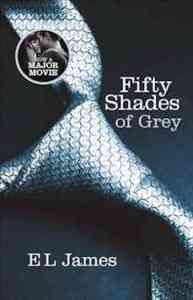
    Fifty Shades to be pulped

    1: Fifty Shades of Grey (Fifty Shades, #1)
    by E.L. James
    (Simply just too insufficient, subpar, and empty to be bothered with!)
    Replace with: Delta of Venus, by Anais Nin

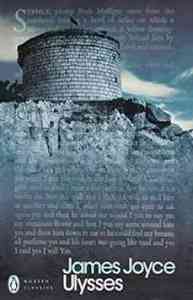
    Ulysses to be pulped

    2: Ulysses
    by James Joyce
    (It’s a pot full of words that has been overturned to spew-out nonsense!)
    Replace with: Mrs. Dalloway, by Virginia Woolf

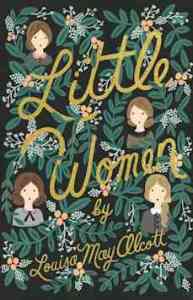
    Little Women to be pulped

    3: Little Women
    by Louisa May Alcott
    (I loathed reading this in class and now I want to get even by having it pulped!)
    Replace with: The Nightingale, by Kristin Hannah

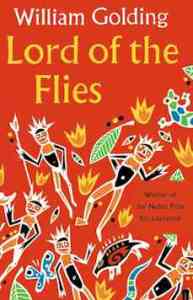
    Lord of the Flies to be pulped

    4: Lord of the Flies
    by William Golding
    (I despised it in school and want my retribution!)
    Replace with: Scar Island, by Dan Gemeinhart

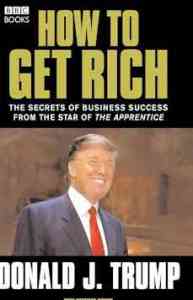
    How to Get Rich to be pulped

    5: How To Get Rich
    by Donald J. Trump
    (I never read it but it goes into the pulper because because!)
    Replace with: 7 Habits Of Highly Effective People, by Stephen R. Covey

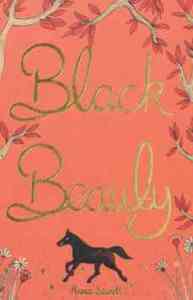
    Black Beauty to be pulped

    6: Black Beauty
    Anna Sewell
    (When I was eight years old, a used copy of this book was given to me on my birthday, from my aunt. It was the first hardcover book I ever owned, aside from prayer books and the Bible. It was everything I detested in a book. It was long, hefty to hold in small hands, and unsatisfactory. I didn’t even enjoy the jacket’s dull appearance or the musty smell of the pages. The saddest thing was that my aunt thought it was a “good book” for me!)
    Replace with: Horse, by Geraldine Brooks

    Agree? Disagree? Which books are you interested in having pulped and transformed into something new?


    Curiosity Killed the Chicken, a recent crime thriller by Neil Mach, poses the question: can a person with channelled aggressive personality disorder make a successful police officer? Is it possible for someone who is incredibly insensitive and competitive to ever become a competent investigator? Should someone who has no respect for personal space and an intolerance for those who are weaker than them work in the police?